Marvel Rivals vs Apex Legends: Which free-to-play shooter takes the crown?

Esports Team

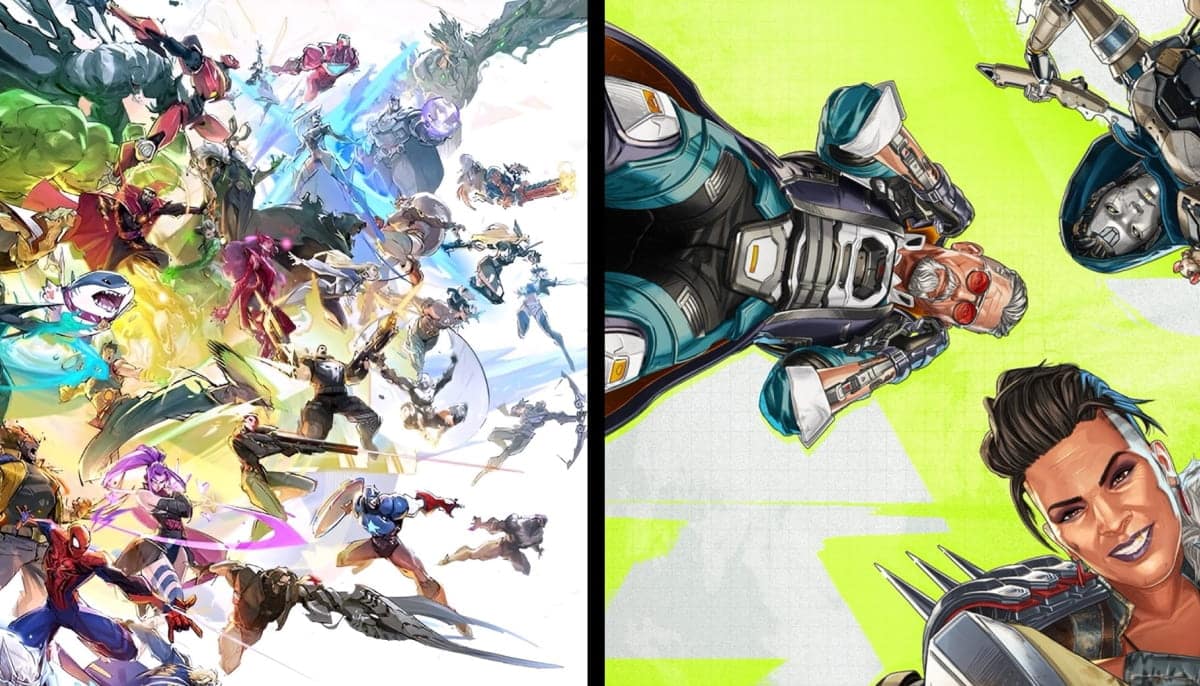
The image shows the covers of two different games: Marvel Rivals (left) and Apex Legends (right)
Image credit: NetEase Games and Respawn

TL;DR

  • Marvel Rivals launched in December 2024 for consoles and PCs, developed by NetEase Games.
  • Apex Legends, developed by Respawn Entertainment, launched in 2019 for PlayStation and Xbox consoles, as well as Nintendo Switch and PC.
  • Both titles are free-to-play, with Apex Legends allowing players to switch between first and third-person viewpoints.
  • Despite there being many differences in both games’ looks and mechanics, some similarities can edge out one title from another, as we’ll find out.

Marvel Rivals vs Apex Legends isn’t a comparison that many players expect. But since both games are free-to-play shooters, there are plenty of variables we can use to judge them by. 

With the former launching in December 2024 and the latter in 2019, you could argue that Apex Legends has an unfair advantage in how long it’s been out for. However, developer NetEase Games isn’t new to the free-to-play space, with games like VALORANT Mobile and Destiny: Rising also available. With an IP like Marvel Rivals, there are plenty of conclusions we can draw now. So with this in mind, we’re comparing Marvel Rivals and Apex Legends to see which title wins out over the other.

Marvel Rivals vs Apex Legends: Gameplay

The image shows gameplay from Apex Legends
Apex Legends takes the free-to-play shooter genre and twists it / Image credit: Respawn

Marvel Rivals leans into other popular titles like Overwatch and, to a point, League of Legends. Due to how characters are offered here, such as Hulk, Magneto, Storm, and more,  there are currently 43 heroes to choose from, split into Duelists, Strategists, and Vanguards. These vary the gameplay, helping players decide how to approach each match with specific heroes. As they each feature unique abilities, this can help maintain the pace, especially with match-driven objectives. Thanks to the number of heroes and respective abilities, there’s plenty of depth here, with more heroes reportedly coming soon. The launch of Season 5.5 saw Rogue join the roster shortly after Gambit in Season 5. Alongside these new heroes are team-up changes and new maps, and modes.

Apex Legends is a free-to-play shooter that offers something different in the battle royale genre. You get placed into squads of two or three, with up to 30 squads landing on an island; the last man standing wins. Loot found scattered across the map can include armour, weapons, gear, and more. You can send pings via your controller to teammates to figure out strategies and more to try and win the match. Like Fortnite, a “safe zone” will form around the map, shrinking as the match progresses. If you’re outside of the zone, you’ll take damage. Apex Legends is currently in its 25th season, Prodigy, which brings more refinements to gun damage, matchmaking improvements, and more. For a title that came out in 2019, there’s still plenty here to differentiate it from other shooters in the space.

Marvel Rivals score: 8
Apex Legends score: 8

Marvel Rivals vs Apex Legends: Game modes

The image shows characters from the game Apex Legends
Two main modes feature in both games, but they are completely different from one another / Image credit: Respawn

Marvel Rivals offers just two game modes: Quick Match and Competitive. Within these, Convergence sets players in a 6v6 match where you must protect or destroy a vehicle as it moves past several checkpoints. There’s a King-of-the-Hill style mode called Domination, and Convoy, where Attackers and Defenders are based around a payload. Arcade mode has two modes, called Conquest and Doom Match, which are essentially Team-Deathmatch and free-for-all modes. There are clear rules for each mode, which can be a lot of fun in the many maps that players can go to. Every one of these modes offers structure, but it’s how you use the different types of heroes currently offered that you play as.

Apex Legends also has two game modes: Core and Freestyle. These both feature their own modes, with Core focusing on competitive matches with Ranked and Unranked modes, while Freestyle is more about having fun with friends, rather than leveling up. In Freestyle, there are three modes: Wildcard features quicker matches that last around 15 minutes with up to 30 players, Mixtape is a playlist of fan-favourite modes, and limited-time modes that are unique to the game. Each of these modes offers plenty of varied situations for players to suit whatever mood they’re in, with Respawn focusing on how it can cater to these needs.

Marvel Rivals score: 7
Apex Legends score: 8

Apex Legends vs Marvel Rivals: Characters

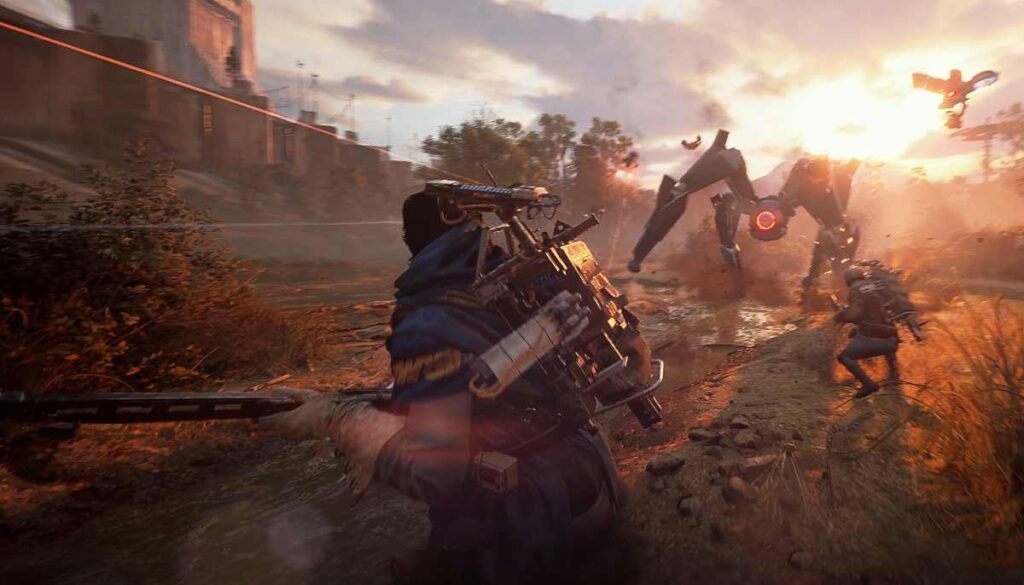
The image shows gameplay from the team-based PvP shooter Marvel Rivals
Marvel Rivals creates dream team-ups you’ve always been hoping to see / Image credit: NetEase Games

Marvel Rivals unsurprisingly relies on its licensed Marvel characters. At the time of writing, there are 43 characters to choose from, including Deadpool, Venom, Magneto, and more, each with their own abilities and voices, which means the replayability is huge here. If you pick a different character in each match, you’ll see how these heroes work throughout the game modes, thanks to their powers and how they work in teams. Marvel Rivals’ ability to create some dream team-ups will appeal to many, but Apex Legends offers characters with no previous baggage. Ultimately, it makes you decide on your favourite heroes to play as, as well as those that may come up in future seasons.

In Apex Legends’ case, there are 27 characters, called Legends, to choose from, which are split into five classes: Assault, Controller, Recon, Skirmisher, and Support. These help you decide what role you plan to take before a match starts. It’s a great way to learn how each character works in these set classes, bolstering the replayability in a way that Marvel Rivals doesn’t. Each Legend also has unique abilities, from double jump to creating portals to faster sprinting. These only help you discover which Legend suits you best, and only add to the variety and replayability even more.

Marvel Rivals score: 9
Apex Legends score: 9

Apex Legends vs Marvel Rivals: Esports scenes

The image announces the fifth year of the Apex Legends Global Series (ALGS)
ALGS Year 5 is now in full swing, but with some big changes / Image credit: Respawn

Developer NetEase Games has wasted no time in getting Marvel Rivals ready for the esports industry since launching the title in December 2024. Marvel Rivals Ignite began on May 1, with a huge $2 million prize pool ready to be distributed to successful players. There has already been a considerable number of viewers keeping track of the tournament since its premiere, with the game’s YouTube channel amassing over 700,000 subscribers, all wanting to keep track of Ignite. Despite the impressive figures, it’s too early to say whether Marvel Rivals will equal or surpass Apex Legends’ presence in the esports scene. But with huge viewership already there for the game’s first official tournament, it’s looking promising.

Since its 2019 release, Apex Legends has remained one of the biggest games in esports, thanks to its unique take on the battle royale genre. The Apex Legends Global Series (ALGS) is the main tournament for the game, with over 1.5 million viewers in 2024 and a $1 million prize pool up for grabs throughout the event. Indeed, the scene took a hit in June 2025 when prolific team Complexity announced its exit from Apex Legends’s esports scene, but EA and Respawn are in the throes of ALGS 2025, with some major changes to the tournament. This includes some regions getting consolidated, Legends getting removed from the pool for the remainder of the series, and much more. Ultimately, Apex Legends’ esports scene is still going strong, with a worldwide appeal that Marvel Rivals has yet to capture.

Marvel Rivals score: 7
Apex Legends score: 9

Verdict

Category Marvel Rivals Apex Legends
Gameplay 8 8
Game modes 7 8
Characters 9 9
Esports scenes 7 9
Total 31 34

Conclusion

Granted, it can be a challenge to compare two free-to-play shooters that can differ massively. Marvel Rivals is a team-based PVP shooter with mission objectives, while Apex Legends is a battle-royale shooter that’s more reminiscent of Fortnite and Call of Duty. However, both games offer characters with unique abilities and two main game modes that branch into different, unique tangents.

It’s a hard call to make, but for now, Apex Legends wins this battle due to the longevity it’s benefited from and the huge esports scene it has. If you want to play something that’s team-based with friends, using characters that you may have grown up with, go for Marvel Rivals. But if you want something that differs from Fortnite and VALORANT, Apex Legends can also scratch that itch differently. For now, though, Respawn’s title reigns supreme, but with Marvel Rivals seemingly firing on all cylinders since its 2024 launch, this battle could be far closer if we revisit it in a year’s time.

FAQs

Which is better, Apex Legends or Marvel Rivals? 

It’s a subjective answer, based on tastes, but Apex Legends just wins out.

Is Marvel Rivals more popular than Apex Legends? 

No, Apex Legends is far more popular than Marvel Rivals, with the latter hovering around 100,000 players daily, compared to roughly 150,000 daily for Apex Legends.

Is Marvel Rivals cross-platform like Apex Legends? 

Up to a point, yes. The only caveat is that ranked matches in Marvel Rivals are not crossplay.

The post Marvel Rivals vs Apex Legends: Which free-to-play shooter takes the crown? appeared first on Esports Insider.

Counter-Strike tops prize money charts in 2025

Esports Team

Counter-Strike tops prize money charts in 2025

Counter-Strike 2’s esports scene distributed the most prize money in 2025, awarding over $32 million (approx £24m) in prize pool over the course of the year.

The data comes from Esports Charts, the esports event and viewership aggregating website, which compared prize pools from various esports over the year.

Did you see our list of the TOP esports games by prize pool in 2025? 💰

1⃣ @CounterStrike
2⃣ @DOTA2
3⃣ @HonorOfKings

If you missed it you can check out the full report on our website 👇https://t.co/3cpRogwzKP pic.twitter.com/yLtclxpF8P

— Esports Charts 🇺🇦 (@EsportsCharts) December 21, 2025

Counter-Strike prize money growth reflective of VRS changes

According to Esports Charts, the £32.27m prize pool represents a year-on-year growth of 41.5%.

Continue reading Counter-Strike tops prize money charts in 2025

A year on the server: Counter-Strike 2 esports in 2025

Esports Team

Counter-Strike 2 IEM Cologne 2025
Image Credits: ESL, Michal Konkol

Throughout 2025, the Counter-Strike 2 esports scene continued to cement its place as one of the world’s most popular first-person shooter titles. 

The year saw several tournament organisers host high-profile events attracting some of the biggest esports organisations across the globe. Across the Tier 1 circuit alone, more than $32m (~£23.7m) in prize money was on offer. 

Alongside massive prize pools, Valve continued to implement a variety of updates aiming to preserve Counter-Strike 2’s open ecosystem, while also injecting fresh life into the game through map pool adjustments. 

From one team’s domination to the rise of unproven rookies, Esports Insider reflects on an action-packed year of Counter-Strike 2 action in 2025.

Team Vitality’s Era of Dominance

Team Vitality winning BLAST.tv Austin Major CS2
Image Credits: BLAST.tv, Michal Konkol

After beginning the year with a top-eight finish at BLAST Bounty Season 1, Team Vitality quickly asserted its authority, winning six Tier 1 events between February and June. 

In addition to a wealth of success, the French organisation scored the second-longest winning streak in Counter-Strike history, securing 30 LAN victories. The run started off with a 2-0 sweep of 3DMAX at IEM Katowice and ended with a surprise 13-3 defeat at the hands of Legacy during the Swiss stage of the BLAST.tv Austin Major.

Despite losing its opening best-of-one at the Major, Team Vitality bounced back at the first of two tentpole events and convincing victories over Nemiga Gaming, 3DMAX, and Virtus.pro awarded the team with a seventh consecutive playoffs appearance. A 2-0 sweep over NAVI, followed by a 2-1 win over MOUZ, sent Team Vitality to another Grand Final, giving the roster a chance to further cement its legacy.

Waiting in the Austin Grand Final was The MongolZ, a team consistently spearheading the growth of Counter-Strike esports across Mongolia and Asia. The Mongolian organisation stunned the opposition with a 13-5 stomping on Mirage, putting 2025’s frontrunners on the back foot. 

Team Vitality responded with a commanding 13-4 scoreline victory on Dust II, , levelling the best-of-three. Mathieu ‘ZywOo’ Herbaut demonstrated his prowess without the AWP in hand with an early one-versus-two clutch in round three to keep the momentum rolling. A 13-6 win on Inferno completed the reverse sweep, securing the first Major title for Team Vitality since 2023. 

As a result of winning the Austin Major, the French org retained its top spot in the Valve Regional Standings (VRS) heading into the second half of the season. However, Team Vitality’s run of dominance came to an end during IEM Cologne at the hands of MOUZ, with the German organisation eliminating the Austin Major champion in the semi-final. 

The top-four finishes at the tournament followed by similar placements at BLAST Bounty Season 2 and the Esports World Cup halted Team Vitality’s early-season momentum. 

A second-place finish at BLAST Open London showed the team’s form was once again on an upward trajectory. While the French side may not have bested G2 Esports in the Grand Final, it was yet another appearance in a Tier 1 title decider. The brief losing streak came to an end at ESL Pro League Season 22 with a dominant 3-0 sweep over Team Falcons, marking a return to winning ways. 

Another top-four placement at BLAST Rivals Fall suggested more work was to be done to fully re-establish a dominant run heading into the StarLadder Budapest Major. Similar to Austin, Team Vitality lost its opening Swiss stage match to FaZe Clan before rebounding with three consecutive victories to lock in a playoff spot. 

The Team Vitality of old returned in the quarter-finals against The MongolZ in a rematch of the Austin Grand Final. A 2-0 sweep secured a semi-final clash against a long-time rival, Team Spirit. Even with Danil ‘donk’ Kryshkovets consistently making an impact, Team Vitality emerged victorious with a hard-fought 2-0 win to earn a place in back-to-back Major Grand Finals. 

FaZe Clan joined the defending Major champion after a Cinderella run from the opening stage. The Red Militia’s trusted pick of Nuke gave the team an early lead in the first-ever best-of-five Grand Final. However, Team Vitality showed its class in the next three maps, reeling off Dust II, Inferno, and Overpass with clinical precision to complete a successful title defence. 

Despite a few hiccups along the way, Team Vitality ushered in a new era of dominance in Counter-Strike 2, an esport where several teams are frequently in contention for championship glory.

Valve’s Increased Involvement              

BLAST.tv Austin Major showmatch Counter-Strike 2
Image Credits: BLAST.tv, Michal Konkol

In July 2024, Valve unveiled a new tournament rulebook for the Counter-Strike 2 ecosystem, changing the number of teams directly invited to events and introducing event announcement deadlines, while defining which events are considered by the VRS system. 

Moving forward, February 2025 brought a significant adjustment to the VRS model, resulting in match forfeits holding the same value as any defeat in both online or offline tournaments. Other updates included changes to prize pool calculations, which now considers club revenue offered by organisers such as ESL FACEIT Group and the Esports World Cup.

Ahead of the Budapest Major, the Counter-Strike 2 developer and publisher cancelled the Major Regional Qualifiers (MRQs), putting greater emphasis on the VRS. As a result the top 32 teams from October’s VRS secured places at the season-ending event.

The decision sparked a renewed interest in Tier 2 tournaments, as teams scrambled for last-minute VRS points in a bid to compete in the Hungarian capital. Fragadelphia’s Blocktober eventattracted several notable European names, with Fnatic emerging victorious to clinch its spot at the Major. 

Outside of its continued tinkering with the tournament rulebook and the VRS, Valve made a solitary adjustment to the Active Duty map pool following Team Vitality’s success at Austin Major. Anubis departed the map pool in favour of Overpass for the launch of Premier Season Three, marking the urban canal map’s return after its removal in April 2024.

Forfeits remained a focal point of Valve’s adjustments to the Tournament Operations Rulebook (TOR). Following Håvard ‘rain’ Nygaard’s impromptu return to the FaZe Clan lineup during ESL Pro League Season 22,  the published added a new rule stating that the  teams will have to forfeit a match if fewer than three members of the invited roster were present.

Valve is no stranger to implementing rule changes midway through tournaments. As the Budapest Major was reaching its climax,  the company updated the TOR once again. This time around, it turned its attention towards skin betting and case-opening websites. Amendments to the Limited Game Tournament License restrict tournament organisers and teams from displaying content that violates Valve’s IP. 

Hence, teams can no longer showcase any skin gambling or case-opening sponsors on their jerseys, and event organisers are barred from accepting sponsorship deals from such websites. 

While Valve aims to house an open ecosystem, its increased involvement has certainly impacted several aspects of the Counter-Strike 2 esports scene.

The Rise of FURIA

FURIA at IEM Cologne
Image Credits: ESL, Helena Kristiansson

After relying on an all-Brazilian roster throughout 2024 and the first four months of 2025, FURIA recruited Mareks ‘YEKINDAR’ Gaļinskis and Danil ‘molodoy’ Golubenko, adding some international flair to the lineup.

A top-eight finish at the Austin Major looked to act as a catalyst for an upswing in form, but a top-12 placement at FISSURE Playground #1 and failure to qualify for the BLAST Bounty Season 2 playoffs proved more work was required to reach the top. The breakthrough came at FISSURE Playground #2, where FURIA overcame The MongolZ in a close five-game series to lift its first Tier 1 LAN trophy.

Even in his rookie year, molodoy looked at home with the AWP in hand. Exceptional positioning paired with lightning-fast reactions quickly put his name among Counter-Strike’s sharpest snipers. Despite ranking in the top-eight at ESL Pro League Season 22, the foundations to build a formidable force were set.

A month after winning FISSURE Playground #2, FURIA added one more trophy to its cabinet at the Thunderpick World Championship by completing an unlikely reverse sweep against NAVI. 

The ball continued rolling as molodoy shined alongside a resurgent Kaike ‘KSCERATO’ Cerato, resulting in FURIA climbing to the top of November’s VRS leaderboard. Two additional Tier 1 victories at IEM Chengdu and BLAST Rivals Fall put the team in a prime position to contend for glory at the Budapest Major.

FURIA dominated Stage 3 from the outset, defeating NAVI, Imperial Esports, and G2 Esports without conceding a map to book its place in another Major playoffs. The team faced off against NAVI once again; however, the Ukrainians set the pace on Mirage with a 13-5 scoreline, putting the tournament favourites under pressure. 

Thanks to Gabriel ‘FalleN’ Toledo’s clutches, FURIA stayed alive and later responded with a thrilling 16-13 win on Inferno to level the series. 

FalleN’s old stomping ground of Train would determine the outcome of FURIA’s Major campaign; however, the Chengdu champions had no answer to NAVI’s ruthless offensive strategy. The Brazilian organisation lost to the Ukrainian side 13-3, exiting the tournament in another Major quarter-final.

Despite the defeat, FURIA’s early-season roster change paid off and it is heading into 2026 with an excellent opportunity to remain positioned among the world’s best. 

FaZe Clan’s Cinderella Run

S1mple with FaZe Clan Counter-Strike 2
Image Credits: ESL, Helena Kristiansson

The 2025 season was packed full of turbulent moments for the FaZe Clan roster hoping to re-establish itself among Counter-Strike 2’s elite teams. In addition to a year filled with disappointing results, the Antwerp Major winners struggled to settle on a roster capable of climbing the VRS ladder.

May 2025 saw Helvijs ‘broky’ Saukants move to bench in to make space for Oleksandr ‘s1mple’ Kostyliev for IEM Dallas and the Austin Major. Despite multiple underwhelming performances, FaZe Clan reached the Major playoffs once again. That said, a devastating 2-0 defeat to The MongolZ in the quarter-final put an end to an otherwise uninspiring tournament. 

Broky returned to the starting lineup in July, while August saw Jonathan ‘EliGE’ Jablonowski become the latest benchwarmer before rejoining Team Liquid. Jakub ‘jcobbb’ Pietruszewski became the latest recruit to the FaZe Clan.

The young, unproven rookie armed with a wealth of potential earned the opportunity to compete in the highest tier after displaying promising performances under the Betclic Apogee Esports banner. 

Midway through FISSURE Playground #2, Team Liquid revealed Russel ‘Twistzz’ Van Dulken’s return to FaZe Clan in another surprising roster move. Nearly a decade after joining the Red Militia, Håvard ‘rain’ Nygaard stepped away for Twistzz, finalising the lineup for the second Major of the year.

FaZe Clan began the StarLadder Budapest Major in Stage 1 and found itself on the verge of an early elimination following defeats to NRG and Ninjas in Pyjamas. The team came within half a second of heading home against RED Canids before rallying to defeat the Brazilians and Fluxo 2-1, booking its place in the second stage by the narrowest of margins. 

FaZe looked different in Stage 2 as it achieved three convincing victories over Passion UA, Aurora Gaming, and Ninjas in Pyjamas to advance to Stage 3. Continuing the momentum, the organisation defeated Team Vitality, 3DMAX, and Passion UA to round off another solid stage and qualify for playoffs against all the odds. 

In front of a massive crowd at Budapest’s MVM Dome, FaZe Clan swept MOUZ 2-0 in the quarter-final before eliminating NAVI 2-1 to complete  a fairytale run to the Grand Final. 

The roster struck first in the opening map, taking Nuke 13-6 and giving fans hope that the notoriously inconsistent squad  could find its way to the top step of the podium. However, the Austin Major winner, Team Vitality, halted any kind of momentum, outclassing FaZe Clan on Dust II, Inferno, and Overpass to extinguish the opponent’s flame.

Although FaZe Clan had missed out on another Major trophy, making it to the Grand Final following a season of roster upheaval and inconsistent performances showed that Finn ‘Karrigan’ Anderson’s side still has what it takes to battle against the world’s best.

Heading into 2026, the team could find itself returning to the latter stages of more Counter-Strike 2 Tier 1 tournaments if it can bottle up the FaZe Clan magic and convert it into consistent results on the big stages.

The post A year on the server: Counter-Strike 2 esports in 2025 appeared first on Esports Insider.

Best Drew Levin tweets roasting League of Legends cheaters in 2025

Esports Team

Best Drew Levin tweets roasting League of Legends cheaters in 2025

Drew Levin, leader of Product and Strategy on League of Legends, has spent the best part of the year taking on cheaters.

The Rioter became especially vocal on social media this year, calling out smurfs, cheaters and account sellers on Twitter.

This all started back in August, as Riot Games upped its efforts to crack down on behaviour which was ruining millions of games.

He has become the unexpected hero of the LoL community in 2025, so here is a look back at Levin’s best tweets from the year.

Continue reading Best Drew Levin tweets roasting League of Legends cheaters in 2025

Fighting games in 2026: Which will reign supreme?

Esports Team

A desk setup featuring a monitor displaying two characters 2XKO Ahri and Invincible VS
2XKO Ahri and Invincible VS wallpaper / Image credit: Riot Games & Skybound Games

TL;DR

  • There are four new, big fighting games coming in 2026: Avatar Legends, Invincible VS, 2XKO, and Marvel Tokon: Fighting Souls.
  • All these games benefit from having a massive IP backing them, coming from pre-existing audiences.
  • These 2026 fighting games have had early access, showing that they are more than just cash grabs.
  • Marvel Tōkon: Fighting Souls is the most likely to succeed, attracting Marvel VS Capcom fans and being made by Arc System Works.

In a surprising turn of events, 2026 will be a year filled with new fighting game releases. It’s one of those rare cases where the Fighting Game Community, a corner of gaming that has always been niche, will have too much to catch up on, which is a brilliant problem to have. Esports games for 2026 seem to be in a great space, nonetheless.

Still, given the time required to learn fighting games, the likelihood is that most players will have to pick one or two options. These new fighting games will also need to compete with the massive names still going strong, like Tekken 8 and Street Fighter 6, but with the quality of the titles coming out, they might have a fair shot.

So, let’s take a look at the 2026 fighting games launching for the year and see which has the best chance of succeeding. 

How we determine which 2026 fighting game will succeed

From a success standpoint, we will evaluate how well a game will do in terms of potential player numbers, longevity, and esports success. All four titles are based on pre-existing IPs that come with sizable fanbases, which will, of course, have a bearing on how well the games will do. This will also be taken into account, and how well the IP will lend itself to the game’s life-cycle beyond its release.

Here are the four 2026 fighting games we will be comparing, and then grading out of 10:

  • Avatar Legends: The Fighting Game
  • Invincible VS
  • 2XKO
  • Marvel Tōkon: Fighting Souls 

Fighting games 2026 comparison

Avatar Legends: The Fighting Game

Aang and Korra battle in the arena of the upcoming Avatar Legends: The Fighting Game, a 2D fighter with hand-drawn art
Two Avatars existing at once is not possible in the lore / Image credit: Gameplay Group International

Out of all the games on our list, Avatar Legends: The Fighting Game is the one fighting the biggest uphill battle with its IP. While the Netflix show has helped, it’s not as hot an IP in 2025 compared to the others that fighting games are based on. It will certainly help more than harm, bringing the ever-loyal Avatar fans to the game.

Still, Avatar Legends’ greatest asset is the game itself. It looks incredible, being hand-drawn and animated to look just like the series. There has also been wide praise for the game’s mechanics, with many stating that Avatar Legends plays like a real contender for the fighting game space.

With the game being fully 2D, it will age well, and seems to have the mechanical complexity to be a decent esports game, but the initial player numbers will be the hard part. There will be plenty of characters to add to the game too, but getting a large enough audience and keeping them will be the initial hurdle.

  • Potential success rating: 7/10

Invincible VS

A screenshot of a brutal 3v3 tag fighting game set in space, featuring superheroes from the Invincible universe fighting on an asteroid-filled moon surface
Tag-Team Brawler Set in the Invincible Universe / Image credit: Skybound Games

Invincible has become massively popular since Amazon Prime dropped its first season in 2021, and being such a hot property will help it get a mighty launch playerbase. The show is only three seasons deep, as of December 2025, and as more seasons are added, there is more potential for marketing and adding characters to Invincible VS.

While it hasn’t been released yet, the consensus is that Invincible VS plays well, but does feel quite clunky, largely due to the jank of the animations. There is still time for this to be improved, but this could be a conscious choice, since the Mortal Kombat series has often had similar complaints. 

The game looks decent, stylised enough to age reasonably well, and the Invincible IP is certainly going to help the game, but there are some concerns about how it plays for its esports and competitive hopes. It very much feels like a stylised, tag-fighter version of Mortal Kombat, mechanically speaking, which has had esports success. With refinement, Invincible VS could be a strong contender.

  • Potential success rating: 7.5/10 

2XKO

2XKO's characters in a collage
The 2XKO Character Roster spliced together / Image credit: Riot Games

League of Legends is getting more popular year on year, and after Netflix’s Arcane blew minds, 2XKO feels like it has a lot to take advantage of. This League of Legends fighting game feels like a perfect vessel for those who want to get involved with the world of Runterra, but don’t want to play LoL, while also appealing to those who love the MOBA and want even more from the IP.

In early access, the game has been praised for its quick, intense gameplay, and as an esports product, it has one of the best studios behind it: Riot Games, which has cultivated LoL and VALORANT. The co-op mechanics also give players something no other fighter has, and with all the characters 2XKO has yet to add from League, longevity is assured. Being free-to-play massively helps, too.

The game’s stylised aesthetic suits the League IP well; it has received strong reviews in its early access stage, it has the Riot Games esports knowledge behind it, and plenty of characters to keep it going for a long time. The only question is if it offers enough to truly compete with the big guns in the FGC, which only time will tell.

  •  Potential success rating: 9/10 

Marvel Tōkon: Fighting Souls 

Spider-Man, Storm, Ghost Rider, and Iron Man from Marvel Tōkon: Fighting Souls
Marvel Tōkon heroes — Spider-Man, Storm, Ghost Rider, and Iron Man / Image credit: Arc System

Marvel is one of the biggest media IPs in the world, and while the MCU isn’t at its peak, everyone has heard of Spider-Man, Iron Man, Captain America, and so on. That is one of Marvel Tōkon’s greatest assets, along with being a PlayStation Studios game and having one of the most well-regarded names in the FGC developing the project: Arc System Works.

Arc System Works has a record of excellence with fighting games, and is a name that the FGC always gets excited about. Gameplay-wise, it also feels like an admittedly slower spiritual sequel to Marvel VS Capcom. While it is missing the Capcom, those fans will likely flock to this Marvel fighting game, and those who love fighting games, who more than likely know about Arc System Works, will check it out.

Longevity shouldn’t be a problem with Marvel’s practically infinite roster, and Arc System Works has shown it can keep a game going for a long time in the esports scene with Dragon Ball FighterZ. As long as the game hits the ground running at the start, there isn’t much of a reason to believe Tokon: Fighting Souls won’t succeed. 

  • Potential success rating: 9.5/ 10

Conclusion

While many IP-driven games have often been associated with quick cash grabs, especially movie tie-in titles, this doesn’t seem to be the case with the 2026 fighting games. All these games are being properly funded and competently developed, with early access painting flattering pictures of what the final products will look like. 

It feels like these games will be great additions to the competitive space and would make strong 2026 esports games. They would all have to compete with each other, and for a relatively niche part of the industry, four titles in one year may be too much, but there’s no reason why they can’t all co-exist in some form. Sure, some might not be as successful as others, but the Fighting Game Community will be having a great year in 2026.

FAQs

What fighting games are coming out in 2026?

Avatar Legends: The Fighting Game, Invincible VS, 2XKO, and Marvel Tōkon: Fighting Souls are all fighting games coming out in 2026.

What was the best fighting game in 2025?

Fatal Fury: City of Wolves has a strong claim to being the best fighting game released in 2025, winning at The Game Awards.

What is the hardest fighting game?

While the hardest fighting game is subjective, Virtua Fighter 5 R.E.V.O. World Stage is one of the hardest. It requires players to learn different combos based on an opponent’s character size and demands a lot of knowledge and execution to play competitively.

The post Fighting games in 2026: Which will reign supreme? appeared first on Esports Insider.

New format, same ending: four storylines that defined League of Legends esports in 2025

Esports Team

Top moments League of Legends esports 2025
Image Credits: Christina Oh, Riot Games

2025 was not only the season that marked the 15th anniversary of League of Legends esports, but it was also a year that reshaped the entire ecosystem. 

Riot Games’ three-split calendar, the introduction of Fearless Draft, and major ecosystem shifts completely changed the way teams prepared and competed, with narratives often flipping month by month. However, as the old saying goes, the more things change, the more they stay the same. 

Gen.G was in control for most of the year, with top LPL teams like Anyone’s Legend challenging for the crown. The Western teams closed the gap but still need more to fight consistently for the top spots — and when the season reached an epic conclusion, the old guard continued to rise to the top.

Esports Insider takes a look at four major storylines, in particular, that dominated the League of Legends esports scene in 2025.   

A New Era with Fearless Draft

LoL Fearless Draft 2025 format
Image Credits: Riot Games

If 2025 had a single defining phrase, it was the new era with the introduction of the Fearless Draft and three-split seasons across most international leagues — aside from the LCK.

With every major region now creating qualification routes to three international competitions, the year became a rolling pressure test. There was barely time to breathe between splits, and form stopped being something teams could ‘peak’ into for playoffs; players had to show up sharp week after week, or the schedule would expose them. 

Fearless Draft only raised the stakes further. Coaching staff were pushed into the spotlight as draft plans had to survive four and five-game series.

In that environment, the best teams weren’t always the ones with the biggest individual names. More often, rosters with the cleanest synergy, the widest functional champion pools, and the ability to execute multiple drafts shone throughout 2025. 

From a fan perspective, all the changes from this season made League of Legends esports even more exciting, especially given the increased diversity in high-stakes matches. Teams would often choose unconventional picks in the last games of each series, adding more layers of strategic depth that weren’t present in the past decade and a half. 

Gen.G’s Domination and Anyone’s Legend Coming So Close

Gen.G in 2025 LoL season
Image Credits: LiuYicun, Riot Games

For the majority of the year, the clearest answer to ‘who’s the best team in the world?’ was Gen.G. The Korean powerhouse looked a tier above everybody else, especially when it came to consistency.

The headline for the team was without a doubt the MSI title in Vancouver, Canada, where Gen.G beat T1 and lifted the trophy back-to-back. The change to a double-elimination bracket and Fearless Draft also set a new MSI peak viewership record, in the process, further proving the importance of the new draft mode.

If there was another team that deserves a mention this year when it comes to consistency, it must be Anyone’s Legend (AL). With no superstars on their roster, AL was the only LPL team that pushed Korean squads to the limit. 

Unfortunately, it was never able to overcome that: AL lost the five-game series to Gen.G at MSI and the Esports World Cup, and was eliminated in the same fashion by T1 at Worlds quarterfinals. With AL running back the same roster in 2026, the Chinese team will have the chance to prove that limits can be broken.

The West is closing the gap… but it’s still not enough 

Western teams performance in League of Legends esports 2026 season
Image Credits: Riot Games

Speaking of limits, the 2025 season was a bittersweet one for Western League of Legends teams. Even though it feels like the gap to the Eastern teams is shrinking, the difference is still substantial

Fearless Draft definitely helped with closing the gap, but it still feels like Western teams lack the same composure and teamfighting capabilities shown by the top Eastern squads. For EU fans, however, the 2025 season can be considered a positive one, given that G2 ended up in the top eight at Worlds again after missing out on the two previous editions.

And while the “golden era” is distant memories, 2025 did feel like a step in the right direction for the broader Western ecosystem. Teams like FlyQuest and MKOI added more competitive weight to the international pool. 

It’s worth mentioning, however, that the North American and South American regions struggled to drive engagement. The LTA rebrand didn’t work out as intended, and the viewership was only saved by the strong numbers from the LTA South Conference, according to Esports Charts.

While the LTA teams had a good showing internationally, with both Vivo Keyd Stars and 100 Thieves overperforming, the regions were affected internally, which led to the immediate return of the LCS and CBLOL one year later. 2026 will be an important year to understand whether this change could save NA. 

With three international events and more best-of series in the 2026 calendar, the Western teams have a real chance to accelerate that trend by giving them more opportunities in the exact environments where they’ve historically been punished the most.

Gumayusi’s redemption story

Gumayusi's run in League of Legends 2025 esports season
Image Credits: T1

In the end, the season that did everything it could to engineer uncertainty and volatility still arrived at the same conclusion: T1 lifting the Summoner’s Cup in front of thousands and thousands in Chengdu, China. 

The team led by Lee “Faker” Sang-hyeok proved once again that T1 is the team to beat when it comes to League of Legends, and that his legacy is still far from being broken.

While the three-peat itself is a big achievement on its own, it’s the way T1 won it that stood out. The team was the first team to play at Worlds in the play-in stage against Invictus Gaming and fought until the very end, facing all the top contenders such as Anyone’s Legend, Gen.G, and KT Rolster.

And if Faker is the constant of T1, Gumayusi was the defining image. After a rollercoaster of a season, which saw him benched at the start of the year, Gumayusi proved to everyone that he’s still one of the best ADCs in the world, carrying the team when he needed to and earning the Finals MVP — a perfect redemption story.

But just when it seemed like the story had reached its perfect ending, a new chapter opened almost immediately. Last month, Gumayusi announced his departure from the team, joining rival team Hanwha Life Esports and reuniting with his former T1 teammate Choi “Zeus” Woo-je. After becoming a part of the greatest legacy in LoL esports, Gumayusi now has the chance to write a new one — this time, without T1.

The post New format, same ending: four storylines that defined League of Legends esports in 2025 appeared first on Esports Insider.

5 things Arc Raiders can do better going into 2026

Esports Team

Arc Raiders gameplay overview highlighting progression issues, inventory management, endgame content, and improvements heading into 2026
Leapers are a major roadblock for unprepared raiders / Image credit: Embark

TL;DR

  • Currently, progression in Arc Raiders gameplay is too tightly tied to the Expedition Project.
  • Managing your inventory has become a battle of its own, which detracts from the core scavenging and looting.
  • Arc Raiders’ endgame loop feels slightly hollow and in stark contrast to the tense and thrilling gameplay. 
  • One of the most pressing issues is fixing the new bugs that seem to emerge on a weekly basis.
  • The game should do more to encourage players to don their finest gear and incentivise them to push past gear fear. 

The Arc Raiders game has carved out its own identity in the extraction shooter genre, daring and succeeding in making this punishing genre more accessible. The action-heavy combat and approachable systems strike a great balance, and it’s evident in how popular the game remains even when releasing alongside two multiplayer giants.

However, there are a few systems that could use serious refinement if the game wants to keep its momentum moving into the next year. Arc Raiders have growing pains to address, and now is the best time to build on them.

5 things Arc Raiders can do better

1. Progression needs a rethink (beyond expeditions)

Arc Raiders Expedition Project workshop showing suspended ARC technology and industrial interior tied to progression and wipes
Expedition is the endgame for most raiders / Image credit: Embark

Right now, progression in Arc Raiders gameplay is too tightly tied to the Expedition Project, an optional wipe system that asks players to commit tons of materials and currency to retire their raider for rewards. While it is voluntary, the rewards are too good to pass up, and eventually you’ll get tired of your max-level character anyway.

The problem is that the Expedition milestone has become the progression system, rather than one of several meaningful paths. There’s little sense of advancement outside of this goal. Levelling feels slow, skill point rewards are sparse, and outside of unlocking kits, the climb lacks satisfying beats

You can spend hours grinding, extracting, and surviving, and walk away feeling like you’ve made no real progress unless your stash value inches closer to that arbitrary $5 million mark for five skill points. Wiping doesn’t feel optional when there aren’t any other good alternatives.

2. Streamline inventory management and UI

For a game so focused on scavenging, looting, dying, and doing it all over again, Arc Raiders makes managing your inventory feel like a battle of its own. If half the game is managing and collecting loot, it should be more streamlined so players can get back topside faster. It’s gotten so bad that one of the advantages of raiding with a free loadout is the instant queue.

Arc Raiders inventory and stash management screen displaying weapons, crafting materials, backpack slots, and loadout UI
Crafting from the loadout menu would save so much time / Image credit: Embark

Creating a fresh loadout requires navigating through numerous crafting menus, traders, and workbenches, which can significantly reduce the time available for gaming. On top of all that clicking, the stack sizes feel arbitrarily restrictive. 

Perhaps it’s by design to get players burning through their stash more and hoarding less, but it wouldn’t hurt to have rare items like Sensors stack to 10 instead of five. Understandably, equipment like Bandages and Grenades has a smaller stack space, but some wiggle room for crafting items would be welcome.

Take a page from Escape from Duckov and allow players should have the option to partially deposit items needed for quests, so they aren’t taking up dead space or accidentally used for crafting. Recyclables or valuables should prompt players to sell after raids, avoiding dead weight in the stash.

The ability to create loadouts (where players can save preconfigured items that will be crafted with enough materials) or at least quick craft from the stash will save tons of time diving through the menu.

3. Add better and dynamic endgame content

Arc Raiders gameplay is strong, full of tension, and thrilling, yet the current endgame loop feels hollow. Quests, levels, and skill points give players something to strive for, but this doesn’t take long to burn through that content. After that, there’s little meaningful content that challenges or excites high-level players, outside of chasing more gear or getting into PvP.

Arc Raiders combat encounter featuring a massive ARC machine attacking players in an outdoor endgame area
How are you destroying that with a free loadout? / Image credit: Embark

While the Expedition Project serves as the eventual goal of a player to start fresh, it shouldn’t be the goal itself, especially with its current implementation. The steep requirements just encourage players to play it safe and never use anything good.

The absence of variety hurts replayability. Contrary to a loud opinion since the Arc Raiders release date, this game doesn’t need a PvE mode (there’s Helldivers for that); what the game needs is a second layer. Something that’s dynamic and dips back into risking gear for better reward. 

Randomise events and POIs

Randomised world events like Night Raids and boss encounters like Harvester and Matriarch are a great step in the right direction, but it’s diluted with opportunists with free loadouts looking for a distracted target. Instead, there could be a minimum gear threshold to enter these events, serving as the battleground for late-game players to fight other stacked raiders.

Even simply changing the spots of high loot zones will keep raids dynamic, and not have every fight converge to the same POIs. While we’re on this topic, confining events to set real-life time is inherently a bad idea, as it punishes players in non-peak hours and funnels players during certain periods.

Another idea is the ability to create your own quests to expedite blueprint farming, one of the most tedious and RNG-dependent farms in the game. For example, players could deal damage with weapons they’ve looted to slowly earn progress for their blueprint, which also brings these valuables out of someone’s stash and into raids.

4. Fix bugs, exploits, and spawn issues

Arc Raiders has a passionate community that wishes for the game to have a few changes here and there; this piece is certainly no exception. However, everyone can universally agree that Arc Raiders can be a buggy mess at times, and a new exploit seems to emerge every week.

The game has suffered from numerous technical issues that undermine its core gameplay. From crashes to lag to phasing through locked doors to map exploits that give players one-way angles to shoot down other raiders to players quickly swapping shotguns like it’s Fortnite, it’s frustrating and could be considered cheating. 

Until now, the game has been plagued with horrible desync, which explains why you can still get shot from behind cover. This is simply unacceptable as it erodes players’ trust, and no amount of new content can fix that. 

Relevant to this is how Arc Raiders implements its late spawns, which is already another sore spot itself. While there are arguments for the rolling spawns, it’s implementation, where players regularly spawn within line of sight, leads to players memorising these spawns for easy ambushes. Stella Montis is notorious for this toxic spawn camping.

Heading into 2026, before Embark Studios commits to more content, these fundamental issues need to be addressed with greater scrutiny

5. Encourage the use of better gear

One prevalent issue in extraction shooters is getting over gear fear. While primarily a psychological barrier, the game should strive to encourage players to don their finest gear. As of now, Arc Raiders suffers because it’s valid to hoard and sell gear, due to the way wipes work and how free loadouts are implemented.

Arc Raiders gameplay screenshot showing a raider ambushing enemies from above in a ruined urban extraction zone
Introducing a gear value threshold would entice more risk / Image credit: Embark

For one thing, upgraded grey gear is on par, if not better, than most high-tier weapons, especially the Stitcher and Kettle. Why risk bringing out a Bobcat or a legendary when you can get the job done with the bare minimum? Until these weapons are worth the risk, the game’s loot economy will continue to stagnate.

This is more than just cranking up numbers, but also making them more fun or unique, much like how they approached higher-tiered augments. Hullcracker was a great example of this because it had a unique effect against ARCs, which is why the community didn’t take the nerfs to it positively.

Other bonuses, such as additional XP or a stash value multiplier for loading in with better gear, would also encourage risk-taking. Trials serve as a baseline for this, and could be a seamless way to integrate these bonuses.

Conclusion

Arc Raiders is already a standout in the genre, but more refinement will carry this game over the long term. Clearly, players love almost everything about the game, but it’s the surrounding systems before and after raiding that need more love.

Embark Studios built something special here. With the right adjustments, Arc Raiders won’t just be the entry point of the genre; it will define it.

FAQs

Does Arc Raiders have crossplay?

Yes, the game supports crossplay between PC, Xbox Series X/S, and PS5.

Is Arc Raiders better than Escape from Tarkov?

It depends on what you’re looking for in the game. Both games are extraction shooters, which will likely deter many players. Arc Raiders is more accessible, action-focused, and third-person, while Escape From Tarkov is deeper and appeals to hardcore gamers.

How often does Arc Raiders wipe your progress?

If we follow the same pattern, then Arc Raiders will open the Expedition window every 2-3 months. But wipes are optional, and it’s up to you to choose when to reset your progress for the rewards.

The post 5 things Arc Raiders can do better going into 2026 appeared first on Esports Insider.

Where can Fortnite go in 2026? The future of Epic Games’ battle royale

Esports Team

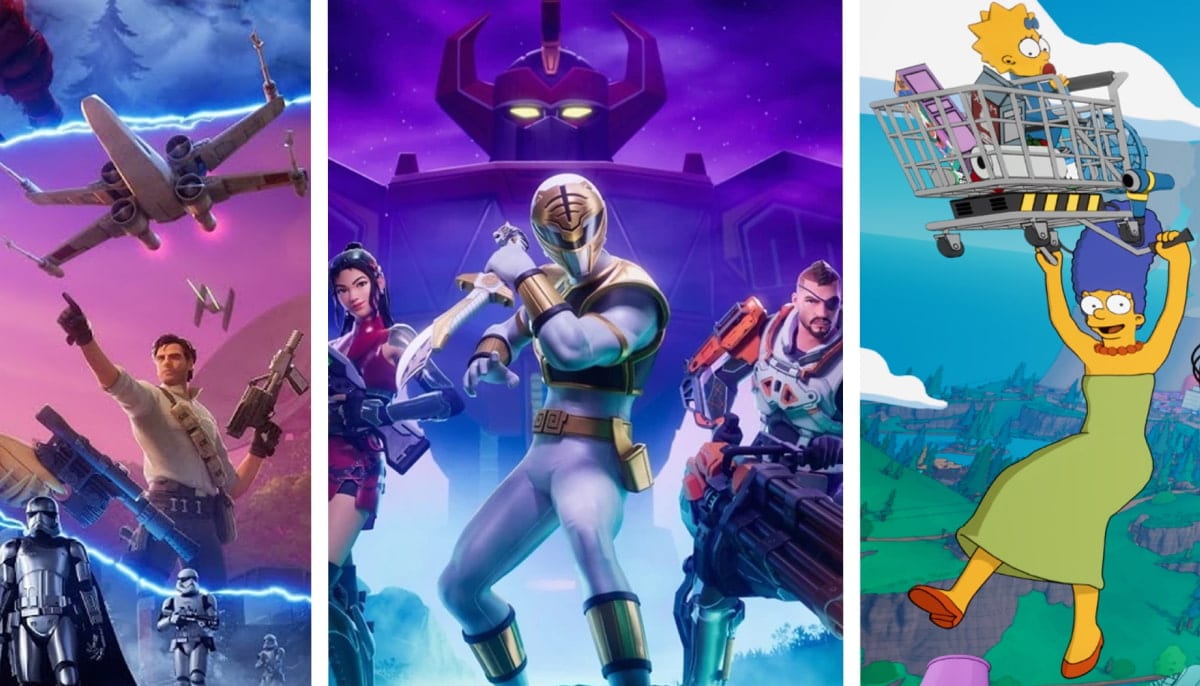
The image shows screenshots from the multiplayer online game Fortnite, demonstrating various major crossovers with popular franchises
Image credit: Epic Games

TL;DR

  • Fortnite, created by Epic Games, came out in 2017 and has become one of the defining battle-royale games in the genre.
  • 2025 saw several successes for Fortnite, with The Simpsons mini-season attracting 2.7 million players who regularly logged in.
  • The year also saw some innovations, such as an AI-powered Darth Vader character and LEGO Fortnite coming into its own.
  • 2026 could see Epic Games position Fortnite more as a destination for players, rather than solely being a battle-royale title.

Fortnite in 2025 has seen numerous chapters in Season 6 that have made it one to remember. From Power Rangers to The Simpsons, Epic Games’ free-to-play battle royale title has maintained a steady player base of almost three million. With Fortnite Chapter 7 currently showcasing movie characters like The Bride from Kill Bill, players are enjoying what the new update has to offer.

However, there’s always room for improvement. Some players have noted that the best Fortnite weapons and items have become increasingly unbalanced in their power, as well as some collaborations in the Fortnite Item Shop disappearing far quicker than others. With this in mind, we’re outlining where Fortnite currently stands and where it can go in 2026.

Looking back at Fortnite in 2025

Fortnite X The Simpsons game scene
The Simpsons collab was a huge success / Image credit: Epic Games

Fortnite in 2025 has seen a steady player base, despite some feeling fatigue from the numerous collaborations that have been made available. However, seeing the entire map be transformed into Springfield, the main city from The Simpsons, or being able to control the Megazord from Mighty Morphin’ Power Rangers, has managed to keep players engaged.

The game also returned to the US App Store, making Fortnite available on iPhone and iPad devices after Apple removed it in 2020 due to a violation of the App Store rules. It was also re-released on the Google Play Store in December 2025, marking its return to the majority of mobile devices.

Overall, combined with improved graphics and ragdoll physics, Fortnite remains relevant in the battle royale genre, despite others like Call of Duty: Warzone and Battlefield 6 trying to make their mark.

Where can it go in 2026?

Here's a screenshot from Fortnite: Battle Royale on a map area called Wonkeeland
AI and more collabs could be in Fortnite’s future / Image credit: Epic Games

It’s clear that across 2025, Epic Games has been trying to make Fortnite a platform, rather than a game. You can see that across the modes it’s introduced, such as LEGO Fortnite and Zero Build, where players can create structures similar to those made in Minecraft. Others, like Fortnite Festival and Rocket Racing, have expanded the title into other genres, moving away from its battle-royale roots.

For 2026, Epic Games seems poised to build on these modes further in Fortnite, making it a destination for players to resume their LEGO-building and more. Rumors suggest that there’ll be a greater emphasis on nostalgia. We’ve seen this already with collaborations featuring the Power Rangers and The Simpsons, two iconic franchises from the 1990s.

However, on the other hand, the OG modes that bring back Fortnite maps from the past also evoke familiar feelings in longtime players of the series. But to tie it all together, we wouldn’t be surprised for Epic Games to see how AI can be leveraged to benefit all of these modes.

We’ve seen the developer dip its toe in this with a Darth Vader AI NPC mentioning and describing players in early 2025. We could see more of this being used for other NPCs – perhaps players could voice chat with them to complete certain objectives, or to help win a battle when a new season ends.

With its standing in esports, Fortnite could also utilise these AI innovations to enhance the spectator experience during matches. Perhaps some characters in current chapters could guest for short moments, increasing the immersion. Or, with many prolific players in Fortnite, there could be room for monetisation, similar to how payouts are done for YouTube and TikTok creators. If Epic Games wants to position Fortnite as a platform, it needs to use some of its revenue for these creators.

Fan sentiment appears to be more focused on longer seasons and fewer changes that significantly transform the map and items. Consistency is something players want to see more of, even as new chapters bring upgrades and refinements to items, locations, and more. Players love the OG and creator modes, but to see a storyline that intertwines all of these modes together could help include those who don’t want to play Chapter 7.

Overall, 2026 could be the year when players see Fortnite become a destination more than ever, complete with new collaborations that tap into even more 1990s nostalgia. If Epic Games listens more closely to player feedback, the game could become an even more successful ecosystem and maintain its 3 million-player base.

Conclusion

2025 has been a good year for Fortnite. The number of collaborations has brought in new players, all thanks to the nostalgia that Power Rangers and others have evoked. Seeing the entire map be transformed into Springfield from The Simpsons, complete with a cel-shaded look, only added to the charm and fun for fans of these franchises. Combined with ragdoll physics and improved graphics, Fortnite has done well this year.

However, it’s clear that Epic Games is working on Fortnite to be a gateway for players, instead of being a battle-royale title. We’ve seen this throughout 2025 with Lego Fortnite and Fortnite Festival, as well as seeing Epic Games test out characters powered by an AI-voice. We’re confident that 2026 will only further amplify these factors, making Fortnite a hub for players to meet, create, and battle, thereby extending the title’s longevity for the foreseeable future.

FAQs

How successful was Fortnite in 2025? 

Fortnite achieved great success in 2025, reaching a peak of almost three million viewers during the Zero Hour event of Chapter 6 on November 30, 2025. 

What was the best Fortnite season in 2025? 

The Simpsons mini-season, held throughout November, is widely regarded as the best Fortnite season in 2025.

What Fortnite collabs could we see in 2026? 

Some Fortnite leaks suggest more collaborations with animated franchises, such as One Piece and South Park, as well as certain characters from other franchises, like Crash Bandicoot and a Fallout character.

The post Where can Fortnite go in 2026? The future of Epic Games’ battle royale appeared first on Esports Insider.

Dota 2 vs Mobile Legends: Bang Bang: PC strategy or mobile dynamism?

Esports Team

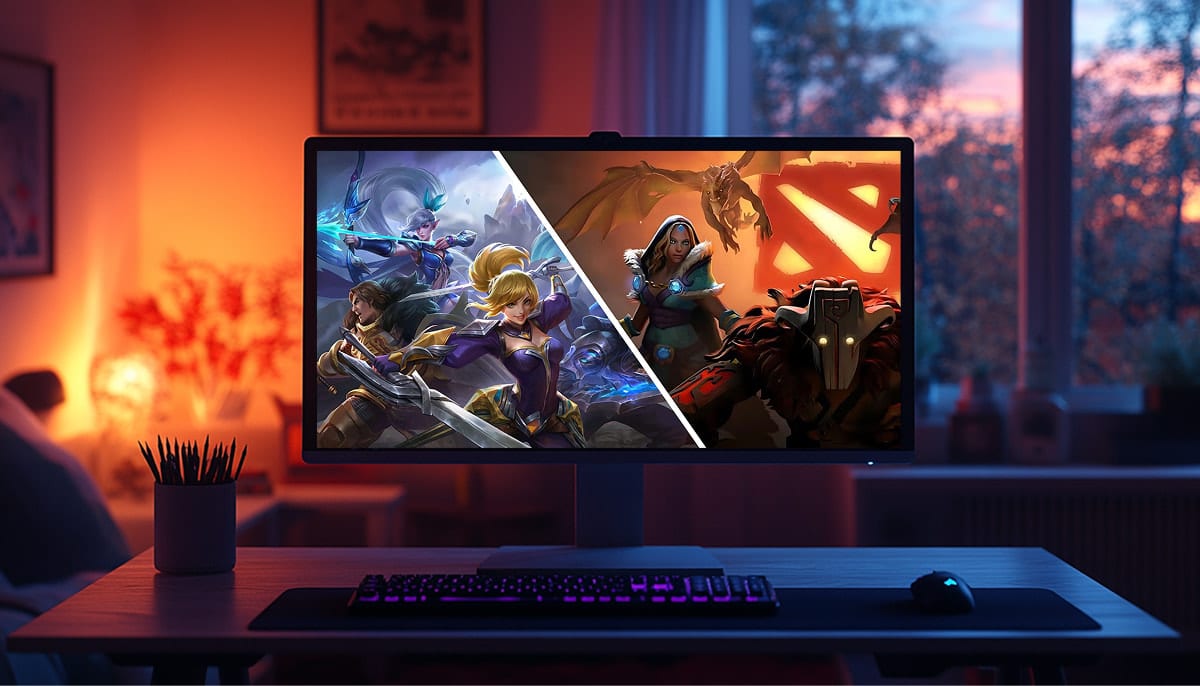
The monitor displays frames from two different games. Game on the left: Mobile Legends: Bang Bang (MLBB). Game on the right: Dota 2
Image credit: Moonton and Valve

TL;DR

  • Dota 2 is the more traditional MOBA, with its home on PC, while Mobile Legends is fast-paced and simpler, being on mobile.
  • Both have massive rosters of over 120 characters, have millions of players, and successful esports scenes.
  • Dota 2 heroes aren’t added as frequently as MLBB’s, but they have more game modes to choose from.
  • The most important argument in Mobile Legends vs Dota 2 is whether you want a fast-paced, simple MOBA experience or a deep, complex, traditional one.

Dota 2 and Mobile Legends: Bang Bang are two of the biggest names in the MOBA genre. Those looking for an alternative to League of Legends need not look much further than these two, and there’s a reason why these titles have earned their immense followings.

Both have grown into esports giants offering millions of dollars as prizes. While both are standard as MOBAs go, there are key differences players should look out for when picking the best one for them.

Bearing that in mind, we’re looking at the Dota 2 vs Mobile Legends: Bang Bang debate and scoring them out of 10 to see which emerges victorious.

Dota 2 vs MLBB: Gameplay

The screenshot shows a moment from Dota 2, specifically a clash between the heroes Tiny and Jakiro in the central part of the map
Similar but different / Image credit: Valve

On paper, Dota 2 and Mobile Legends: Bang Bang are very similar. Both are top-down, 5v5, team-based MOBAs where positioning is critical. Still, the way these titles approach the traditional MOBA format is very different.

Dota 2 is as traditional a MOBA experience as one could ask for. It can be slow, tactical, and methodical, and it requires deep knowledge of the game, given the years of legacy skill current players possess. Dota 2 is time-consuming, but if you’re looking for depth, look no further.

Mobile Legends: Bang Bang is a mobile game, and while Dota’s complex nature suits PC, MLBB’s faster pace and more straightforward gameplay match the wants of mobile players perfectly. It is far more accessible, while Dota 2 is famous for its steep learning curve.

There’s more to Dota 2, and thus more to learn. This formula has kept players addicted for well over a decade, and the series is responsible for the success of the MOBA genre today. While MLBB is the better option for newcomers, especially on mobile, it suffers from the simplicity of both its platform and its design approach, though it is still one of the best MOBAs on mobile.

Dota 2 score: 8/10
Mobile Legends: Bang Bang score: 6/10

Dota 2 vs Mobile Legends Bang Bang: Characters

The image is official promotional art from the popular mobile MOBA game Mobile Legends: Bang Bang
Almost endless options / Image credit: Moonton

Both Dota 2 and Mobile Legends have massive character rosters, the norm for many MOBAs. Dota has 126 heroes while Mobile Legends has 130. MLBB having more characters is impressive, considering Dota 2’s three-year head start and its origins as a Warcraft 3 mod back in 2003.

From a mechanical standpoint, the Dota 2 heroes are more complex. The simplicity of MLBB’s characters makes them easier to understand, although having such simplicity with a character roster that large can be a bit of a hindrance in terms of variety. It does make it easier to identify the best MLBB characters, as there isn’t as much complexity in the matchups.

On the other hand, the complexity of Dota 2’s cast makes learning the game more daunting. This is reflected in their aesthetics, with Dota’s darker, while MLBB characters are often brighter and more vibrant.

Dota 2 score: 7/10
Mobile Legends: Bang Bang score: 6/10  

Dota 2 vs Mobile Legends: Bang Bang: Popularity

The image shows Muerta, a character from the popular multiplayer online game Dota 2
A close contest / Image credit: Valve

It’s difficult to compare the two games’ player counts directly, given that Dota 2 reports daily concurrent player counts on Steam, while MLBB uses less precise monthly data. Mobile Legends had 27.6 million in September 2025 (Active Player) while Dota 2 managed roughly 18 million in the same period (calculated using SteamDB).

While this would ordinarily be an open-and-shut victory for Mobile Legends, Dota 2 is the better-known title and is famous for starting the entire genre, making this contest closer than the stats would have you believe. Still, you can’t argue with the stats, and MLBB benefits massively from being on mobile devices.

Dota 2 score: 8/10
Mobile Legends: Bang Bang score: 9/10 

Mobile Legends vs Dota 2: Game modes

The image shows Hayabusa, an assassin character from the popular mobile game Mobile Legends: Bang Bang
Multiple options / Image credit: Moonton

While MLBB offers a decent number of alternative game modes, from Custom to Magic Chess, its overall simplicity makes it suffer compared to Dota 2. Dota 2 knows it is complicated and offers a handful of game modes to help newcomers ease into the game.

New player mode is perfect for making Dota 2 more accessible, while Turbo Mode is perfect for those who don’t want to wait until the end of time to finish a match. There’s an all-random deathmatch mode, a mid-lane only mode, and plenty of adjustments to normal play to try out. It’s an easy victory here for Dota 2.

Dota 2 score: 9/10
Mobile Legends: Bang Bang score: 6/10 

Dota 2 vs Mobile Legends: Developer support

The character depicted in the photo is Kez, a new hero from the popular multiplayer online game Dota 2
Lots of support on offer / Image credit: Valve

While both games occasionally add new characters, Dota 2’s last addition (Kez) was in December 2024, while Mobile Legends: Bang Bang’s was in September 2025 with Obsidia. While both games are updated frequently, from little tweaks to major updates, MLBB enjoys new characters more regularly.

When comparing Mobile Legends vs Dota 2 in terms of developer support, MLBB clearly comes out on top, even though Valve has continued to do a great job with its MOBA.

Dota 2 score: 7/10
Mobile Legends: Bang Bang score: 9/10  

Dota 2 vs MLBB: Esports scenes

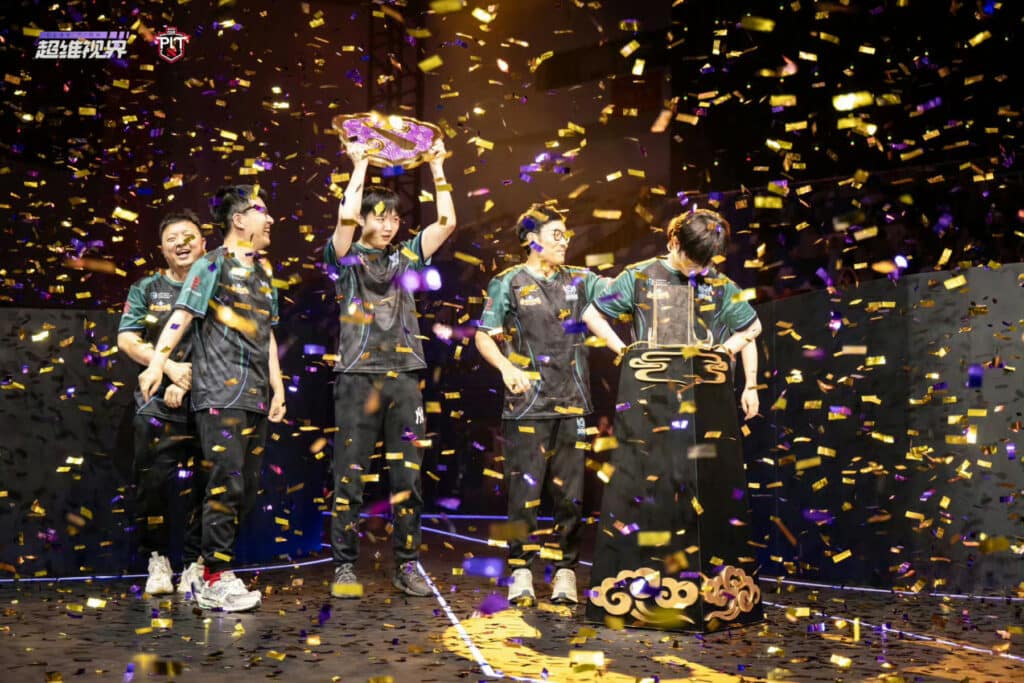
The image shows Team Liquid PH (Philippines) celebrating their victory in the Mobile Legends: Bang Bang (MLBB) Mid-Season Cup (MSC) 2025 tournament at the Esports World Cup (EWC)
A vibrant esports scene / Image credit: Esports World Cup

When comparing MLBB and Dota 2, their respective esports scenes need to be taken into account. When it comes to MOBAs and their esports, only League of Legends has an argument for something superior.

Both are exceptional, and those seeking to climb the Mobile Legends or Dota 2 ranks have an excellent tournament scene to look up to, with both having millions of dollars up for grabs. While both are beyond exceptional, Dota 2 still holds the record for the highest-ever prize pool in esports history, with The International in 2021. 

That gives Dota 2 a slight edge, although you would be hard-pressed to find healthier esports scenes than in these two MOBAs.

Dota 2 score: 9/10
Mobile Legends: Bang Bang score: 8/10 

Verdict

Category Dota 2 Mobile Legends
Gameplay 8 6
Characters 7 6
Popularity 8 9
Game Modes 9 6
Developer Support 7 9
Esports Scenes 9 8
Total 48 44

Conclusion

When tallying the scores, Dota 2 walks away with the lead at 48 points compared to MLBB’s 44. Dota 2 benefits from its greater complexity, more ways to play, deeper cast, and a slightly stronger, record-breaking esports scene.

Conversely, Mobile Legends suffers and benefits from being on mobile devices simultaneously. Mobile devices have given MLBB a massive audience, and its simplicity has made it easier to add to. This simplicity has also meant there is less depth in the game than in Dota 2.

Ultimately, Dota 2 is the superior MOBA for veteran MOBA players, while MLBB is more approachable and the better option for those who want to try the genre without spending too long in a single match. While both are MOBAs, they will appeal to different kinds of players.

FAQs

Is Mobile Legends like Dota 2?

Mobile Legends and Dota 2 are top-down, 5v5 MOBAs, but Mobile Legends has a faster pace and is on mobile devices, while Dota 2 is on PC.

Is Mobile Legends allowed in the US?

Yes, Mobile Legends is allowed in the US after being temporarily suspended in early 2025.

Is Dota 2 still popular?

Dota 2 is still very popular, ranking as the second most-played game on Steam behind Counter-Strike 2.

What is the difference between Dota 2 and MLBB?

Dota 2 is on PC and is more complex, slower, and a traditional MOBA. MLBB is fast-paced, simpler, and on mobile devices.

REFERENCES

The post Dota 2 vs Mobile Legends: Bang Bang: PC strategy or mobile dynamism? appeared first on Esports Insider.

Team Tidebound announces exit from Dota 2 competitive scene

Esports Team

Team Tidebound exits Dota 2 competitive scene
Image Credits: Team Tidebound

Chinese esports organisation Team Tidebound has shut down just a year after entering the competitive Dota 2 scene.

The decision was made after assessing the ‘current CN Dota talent environment and long-term development.’

“After careful consideration and a difficult decision by the club’s management, we regret to formally announce that the Tidebound Esports Club will officially transition to inactive status effective immediately,” Team Tidebound announced on Weibo.

That said, four out of the five players on the roster have already found organisations to compete with ahead of the 2026 season.

Team Tidebound’s lineup consisted of some of the best Dota 2 players in the region such as The International 2016 and Riyadh Masters 2022 winners Zhang ‘y`’ Yiping and Zhang ‘Faith_bian’ Ruida.

Debuting in DreamLeague Season 25: China Open Qualifier 1, the team quickly made a name for itself by winning multiple qualifiers, earning spots at PGL Wallachia Season 3 and ESL One Raleigh 2025.

During its one-year tenure, Team Tidebound lifted the Clavision Masters 2025: Snow-Ruyi trophy and then finished as runners-up at the Asian Champions League 2025.

The organisation also qualified for The International 2025 in Hamburg, where it advanced to the playoffs before getting eliminated at the hands of Nigma Galaxy.

“We extend our highest respect to all members who have represented the club. Thank you for the countless days and nights of hard work in the training room, for travelling tirelessly to competitions, and for turning the tide time and again,” the club added.

Where Have Team Tidebound’s Players Ended Up?

Support players y`and Lin ‘planet’ Hao, along with carry Guo ‘shiro’ Xuanang, have joined Vici Gaming. Meanwhile, midlaner Cheng ‘NothingToSay’ Jin Xiang has transferred to Xtreme Gaming.

Both Vici Gaming and Xtreme Gaming will return to the stage at ESL Challenger China, set to take place from January 30th to February 1st.

Offlaner Faith_bian, on the other hand, hasn’t announced his next destination at the moment.


 Disclaimer: The quotes above have been translated from Chinese, so there may be slight variations in the official wording.

The post Team Tidebound announces exit from Dota 2 competitive scene appeared first on Esports Insider.